
Moving isn’t cheap. Hidden costs like truck rentals, packing supplies, or hiring movers can add up. If you’re not careful, those expenses can add up fast. It makes you wonder when the cheapest time of year is.
Is moving in winter cheaper? In general, it can be. Winter is considered the “off-season” for making a move. Fewer clients are seeking services, so the crews and trucks you need are more likely to be available. You could find better scheduling and lower rental prices. Here’s a quick rundown of what you can expect.
How Much Money Can You Save Moving in Winter?
The main reason to move in winter is better access to materials, rentals, and services at lower moving rates. Competition is lower, and seasonal promotions are more common. What does this mean for you?
- Lower Moving Company Rates: Moving companies often offer lower hourly rates or flat estimates in winter. What would normally cost $2,000 in the summer could be 20% cheaper in winter, saving you $400.
- Cheaper Apartment Rentals: Winter is a great time to move into a rental property. Apartment List’s research on rental seasonality shows rates decline in the colder months. It still varies by market, but even a $100 savings on a $1,500 monthly rent goes a long way over a full year.
- Lower Truck Rental Costs: The cheapest time of year to move is usually when you can DIY the situation. That is why rental trucks are always a good idea. Most companies like U-Haul or Penske offer off-season discounts because demand is lower and pickup/drop-off dates are more flexible.
Packing materials stay about the same, but you may find rental incentives and other winter moving costs at a discount. Be sure to shop around. Even a storage unit that is typically more expensive in the summer may be significantly cheaper because there’s a little snow outside.

Hidden Winter Moving Costs to Consider
While moving in winter has benefits, you shouldn’t go into it with rose-colored glasses. Colder weather can bring additional expenses you may not be prepared for.
For one, bad weather is possible. Snowstorms, icy roads, and freezing rain make for a rough time when loading a truck or managing transportation. If you work with a moving company that charges by the hour, two extra hours due to bad weather at $150/hour can cost an additional $300.
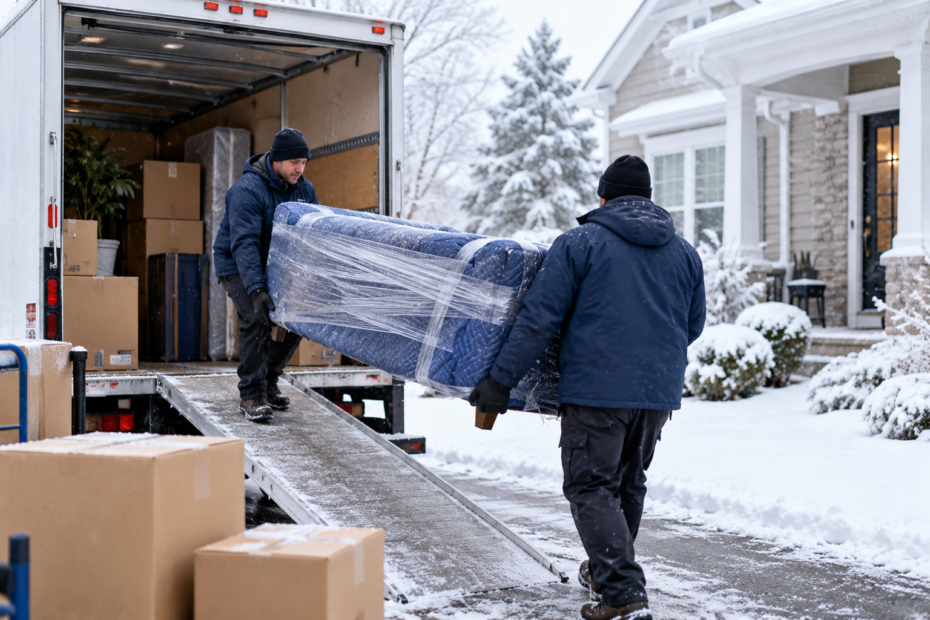
You may also need more moving supplies. When you move a mattress or antique furniture in the winter, you’ll need waterproof coverings because of rain and seasonal storms. You may also need to buy ice melt or hire another hand because walkways can be slippery.
You also need to be on the lookout for any unexpected moving company fees. The Federal Motor Carrier Safety Administration talks about the difference between binding and nonbinding estimates. If you’re working with a nonbinding estimate, fees may be added to the final moving cost due to bad weather.
Then there is the storage unit question. Sometimes, you need to move, but don’t want to send all your furniture and other items into your new living space. Maybe you have varying closing dates on a house, or the apartment won’t be ready for another month. That is where a storage unit can help bridge the timing gap, but it will add a few more expenses for winter moving costs.
6 Tips for Moving in Winter Without Overspending
When you’re wondering whether moving in winter is cheaper, a good rule of thumb is to prepare properly. That is the best way to lower your expenses and get a good deal that fits your moving timeline.
- Always get multiple moving quotes from at least three companies and ask about any seasonal discounts or weather-related fees.
- Choose a weekday for moving in winter when the demand is the lowest, and the company is more likely to offer a discount.
- Keep a close eye on the local weather report and monitor conditions while discussing the movers’ rescheduling policies.
- Clear any walkways around the pickup and drop-off locations of snow, ice, and other obstructions that could pose a risk.
- Protect all your items with waterproof coverings and plastic containers to keep moisture from getting where it doesn’t belong.
- Start earlier, as winter daylight tends to be more limited, especially if you live in a northern state.
Is Moving in Winter Worth It?
Moving at any time of the year requires paying close attention to your budget. Winter may be a better financial decision, but you need to prepare and ask about seasonal discounts, moving incentives, and other promotions. Any money you can shave off the total cost will be more cash in your pocket.
If you’re relocating, follow these tips for moving in winter. It can be the cheapest time to move, but only if you’re proactive and ask questions to get the best deals.