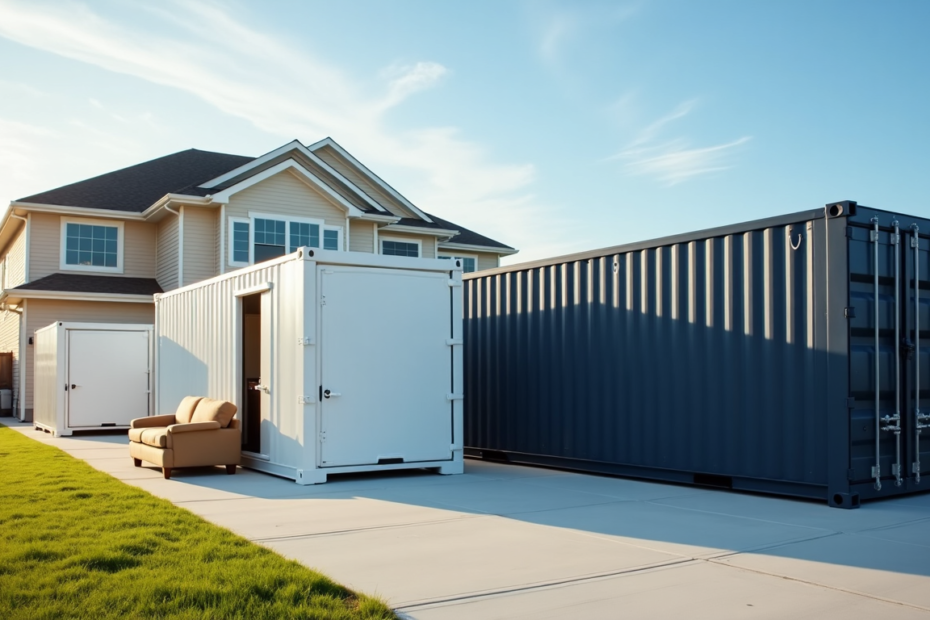
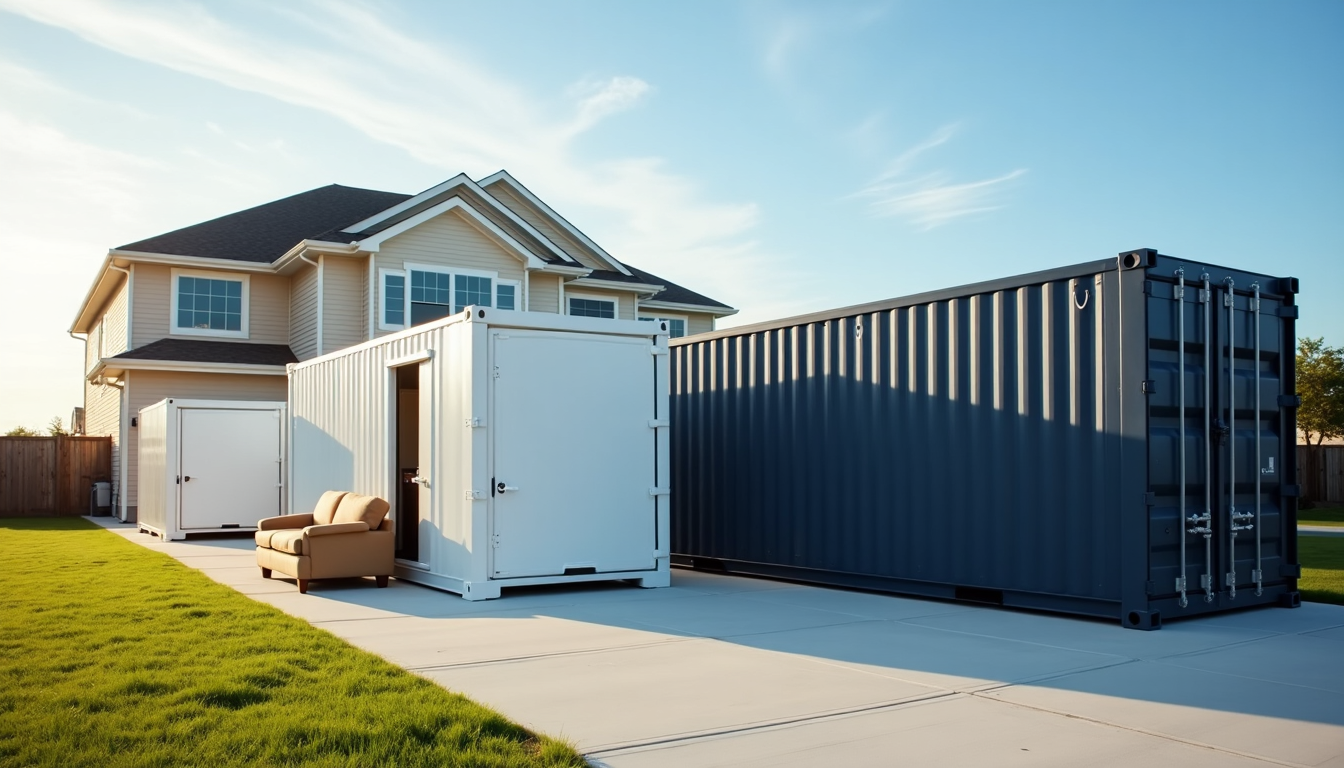
A portable moving unit is a lockable, ground-level container (typically 8, 12, or 16 feet long) that is delivered to a customer’s property, loaded on the customer’s schedule, and then either stored or transported to a new address. For moving company owners, it is more than a product. It is a service line that separates labor from transportation and turns a one-day job into a multi-week revenue relationship.
This guide is written for owners and operators of moving businesses. It covers the market case, the four ways to enter the category, a unit-economics framework you can fill in with your own numbers, and a step-by-step launch plan.
Key Takeaways
- The volume problem is structural. The share of Americans who move each year is at a record low, so growth has to come from more revenue per move, not just more moves.
- Portable units monetize time, not just distance. Rental days, delivery trips, and load/unload labor stack into one customer.
- You don’t need a fleet to start. Partnering, providing labor for container customers, or licensing are lower-capital entry points than buying containers.
- Utilization is the metric that matters. A container sitting in your yard is a depreciating asset; track revenue per container per month.
- The winning offer is usually a hybrid: a portable moving unit plus your crew for loading, unloading, and packing.
Why Portable Moving Units Matter to Moving Companies Now
The demand backdrop for the traditional moving business is tightening. Census Current Population Survey data show the U.S. mover rate fell to roughly 7.8% in 2023, the lowest since tracking began in 1948, down from 20.2% in the late 1940s.
The decline is sharpest among the customers movers rely on most. The same data put the homeowner mover rate near 4.1% and the renter rate near 16.2%, compared with 9.5% and 35.2% in 1988. The Census Bureau has noted that renters typically move at two to three times the rate of owners.
Meanwhile, the portable category keeps growing. One industry estimate values the global portable moving and storage market at $7.2 billion in 2025, rising to $11.3 billion by 2034, with North America accounting for about 42.5% of revenue. Market-research figures vary by methodology, so treat any single estimate as directional.
The Revenue Mix Argument
Storage has always been part of moving-company economics. The last published American Moving & Storage Association breakdown (2010 data) attributed about 20.2% of industry revenue to warehousing and storage, versus 69.9% from transportation.
Portable units let smaller operators capture that storage revenue without building a warehouse. That matters in an industry where AMSA data showed nearly half of companies have fewer than five employees.
How a Portable Moving Unit Service Works
Every portable moving unit program, from national brands to a three-truck local operator, runs on the same lifecycle. Understanding each stage helps you see where your crews add value and where costs hide.
The Six-Stage Job Lifecycle
- Booking and site check. Confirm placement surface, clearance, slope, and any HOA or street-permit rules.
- Delivery. The unit is dropped on a driveway, lot, or approved street space.
- Loading. The customer loads, or your crew loads for an hourly or flat fee.
- Pickup and storage or transport. The unit returns to your yard, a storage facility, or a long-haul carrier.
- Redelivery. The unit is dropped at the new address.
- Unloading and final pickup. Another labor opportunity, then the unit is cleaned, inspected, and returned to inventory.
Each stage is a billable event. That is the core economic difference from a same-day truck move, where everything is compressed into a single invoice.
Container Construction Options
- Steel: Most durable and secure, with the highest weight. Heavier units need more capable handling equipment.
- Wood (or wood-and-steel frame): Lighter and often cheaper, but more prone to moisture issues and wear.
- Aluminum or composite: Lightweight and weather-resistant, usually at a higher purchase price.
Handling Equipment
Most operators use either a tilt-bed trailer or truck, which slides units on and off at an angle, or a lifting frame system that keeps the unit level during delivery. A level lift protects contents that are already loaded, which matters for redeliveries. Your equipment choice will also determine which placement sites you can serve.
Four Business Models for Moving Companies
The biggest mistake owners make is assuming “adding containers” means buying a fleet. In practice there are four distinct entry models, each with a different capital and risk profile.
| Model | Upfront Capital | Margin Potential | Control of Customer | Best For |
|---|---|---|---|---|
| 1. Referral partner | Near zero | Low (commissions) | Low | Testing demand before committing |
| 2. Labor-only for container customers | Low | Moderate (labor rates) | Medium | Crews with idle mid-week capacity |
| 3. Franchise or licensed brand | Medium to high | Moderate (after royalties) | Medium | Owners who want a playbook and brand recognition |
| 4. Own-fleet operator | High | Highest | Full | Established local movers with yard space and proven demand |
Many successful operators move through these models in sequence. They start with labor-only work to learn the demand curve, then invest in a small fleet once the data justify it.
Unit Economics: A Framework You Can Fill In
Container programs live or die on a handful of variables. Use the framework below with your own quotes and local pricing.
Revenue Streams Per Container
- Monthly rental (or prorated days)
- Initial delivery, final pickup, and any redelivery fees
- Load and unload labor (your highest-margin attach)
- Packing services and materials
- Transport fees for out-of-area moves
- Contents protection or damage waiver products
Cost Buckets
- Container purchase or lease, depreciated over its useful life
- Delivery truck, tilt trailer, or lift system
- Driver wages, fuel, and maintenance per trip
- Yard or storage space
- Insurance (auto, general liability, cargo/contents)
- Software, GPS tracking, and marketing
The Three Formulas That Matter
- Utilization rate = containers on rent ÷ total containers.
- Revenue per container per month (RPCM) = total container-related revenue ÷ total containers.
- Payback period = total program capital ÷ monthly contribution margin.
To benchmark what consumers pay on the national side of the market, run a few scenarios through our PODS Cost Calculator. For pricing your crew’s load/unload attach, our Moving Labor Cost Calculator shows typical hourly ranges customers expect.
Real-World Scenario: A Three-Truck Local Mover Adds 20 Units
The following is a hypothetical example with illustrative numbers. Replace every figure with your own quotes before making decisions.
“Blue Ridge Movers” runs three trucks in a mid-sized market. The owner notices that about one in eight lost quotes cite timing gaps, such as a closing date that falls two weeks after the lease ends. He decides to buy 20 steel units and one tilt trailer.
Assumptions
- Container cost: $3,500 each ($70,000 total)
- Tilt trailer and setup: $15,000
- Monthly rental rate: $175
- Delivery or pickup fee: $150 per trip
- Average rental length: about 1.5 months
- Utilization: 70% (14 of 20 units on rent)
- Labor attach rate: 60% of new rentals book a $400 load or unload job
Monthly Revenue
- Rental: 14 units × $175 = $2,450
- Trips: about 9 new rentals × 2 trips × $150 = $2,700
- Labor attach: about 5.4 jobs × $400 = $2,160
- Total: roughly $7,310 per month
Monthly Costs
- Truck and trailer allocation: $1,200
- Driver time (18 trips × 2 hours × $30): $1,080
- Fuel: $450
- Insurance: $400
- Maintenance reserve: $200
- Software and marketing: $350
- Total: roughly $3,680 per month
Outcome
Contribution margin is about $3,630 per month. On $85,000 of capital, payback lands near 23 months. RPCM is about $365.
Now notice the sensitivity. If utilization drops to 50%, rental revenue falls by $700 and fewer trips and labor jobs follow, pushing payback well past three years. If the labor attach rate climbs to 80%, payback shortens by several months. Utilization and labor attach are the two levers to manage weekly.
Step-by-Step: How to Launch a Portable Moving Unit Service
- Audit your lost-quote data. Tag every lost or declined job from the last 12 months by reason. Count how many involved timing gaps, storage needs, or DIY price shoppers.
- Choose your entry model. Use the comparison table above. If you can’t point to clear demand, start with referral or labor-only work.
- Map placement rules in your service area. Check municipal right-of-way permits, HOA restrictions, and apartment-complex policies. Our guide to where you can place a moving container covers the common rules customers ask about.
- Specify your container. Pick sizes based on your typical job. Most local residential work clusters around one- to three-bedroom homes.
- Select handling equipment and train drivers. Run supervised practice drops on gravel, slopes, and tight driveways before going live.
- Lock down insurance and contracts. Confirm with your broker how contents in a customer-loaded unit are covered. Define liability clearly in your rental agreement.
- Build bundled pricing. Offer good-better-best packages: unit only, unit plus loading, and unit plus full packing and unloading.
- Install tracking. GPS or barcode each unit and log every status change. You cannot manage utilization you cannot see.
- Launch, then review weekly. Track the KPIs below for 90 days before deciding whether to scale the fleet.
KPIs to Track From Day One
- Utilization rate (target a steady band, not a one-month spike)
- Revenue per container per month
- Average rental duration
- Labor attach rate
- Delivery trips per driver-day
- Damage claims per 100 deliveries
Portable Moving Units vs. Other Service Formats
Customers compare your container offer against every other way to move. Knowing where it wins helps you sell it to the right buyer.
| Format | Customer Cost | Schedule Flexibility | Built-in Storage | Mover’s Revenue Opportunity |
|---|---|---|---|---|
| Full-service move | Highest | Low (fixed date) | Only via warehouse | High per job, labor-intensive |
| DIY truck rental | Lowest | Low (rental window) | No | Labor-only jobs |
| Portable moving unit (self-load) | Low to moderate | High | Yes | Recurring rental and trip fees |
| Hybrid (unit + your crew) | Moderate | High | Yes | Highest lifetime value per customer |

The hybrid format is where established movers have a natural edge over container-only brands. You already have trained crews, insurance, and local reputation. Pairing them with a portable moving unit gives price-sensitive customers a middle option between full service and pure DIY. For more on how customers think about this pairing, see our guide on combining moving and storage services without overspending.
Myth vs. Reality: Portable Moving Units
| Myth | Reality |
|---|---|
| “Containers will cannibalize our full-service moves.” | Container buyers are often customers you were already losing to truck rentals or national brands. A hybrid offer recaptures them at a lower price point. |
| “You need a big fleet to compete.” | Local operators compete on speed, crew quality, and flexibility. A small, highly utilized fleet beats a large idle one. |
| “The money is in the monthly rent.” | For many local programs, delivery trips and load/unload labor can rival or exceed rental income per customer. Rent is the anchor, not the whole margin. |
| “Portable units are only for long-distance moves.” | Renovations, home staging, closing-date gaps, and downsizing generate steady local demand with no long-haul leg at all. |
| “Customers don’t care who owns the box.” | Customers care about who shows up. Driver professionalism at delivery is often the moment that earns the review and the referral. |
What National Brands Teach Local Operators
National container companies have trained consumers to expect online booking, transparent pricing, and container tracking. Studying how they present size options and fees is worthwhile. Our roundup of the best portable storage container companies and our PODS storage space calculator show how customers are being guided to choose sizes.
The lesson for local operators is not to copy the brands. It is to match their convenience while beating them on local knowledge, crew quality, and the ability to say yes to unusual jobs.
Sources and Methodology
- U.S. Census Bureau, Current Population Survey, historical geographic mobility tables (summarized via HomeSnacks).
- U.S. Census Bureau, “United States Mover Rate at a New Record Low” (Random Samplings blog).
- Market Intelo, Portable Moving and Storage Market report (2025–2034 estimates).
- American Moving & Storage Association industry profile data, as cited by industry members.
- Scenario figures are hypothetical and provided for planning illustration only.
Conclusion
A portable moving unit is not a side product for moving companies. It is a way to earn more from every customer at a time when the number of moves is shrinking. Start with demand data, choose the entry model that fits your capital, and manage utilization and labor attach relentlessly.
The operators who win this category will be the ones who combine container flexibility with the crew quality national brands cannot easily replicate.
Over to you: If you run a moving company, would you rather own your own fleet of portable units or partner with an existing container brand and focus on labor? Share your reasoning in the comments below.